Founders who are not EU citizens but want to sell into Europe keep running into the same wall. Setting up a company inside the EU as a non-resident is possible but often slow, expensive, and tangled in residency and substance requirements. Meanwhile, doing business from further afield creates friction — payment processing, client trust, time zones, and the sense of being “offshore.” Serbia sits in an interesting position between these problems: outside the EU, but adjacent to it in geography, trade ties, and increasingly in regulation.
For a non-EU founder — including many from the wider region and beyond — Serbia offers a European base with faster, cheaper company setup than most EU states, competitive taxes, functional banking, and a trade relationship with the EU that keeps goods and services moving. It is not a magic jurisdiction, and it carries real trade-offs, but for the right founder it is a serious option that gets overlooked because it is not the usual Estonia-or-Ireland conversation.
This is an honest look at Serbia as an EU-adjacent base in 2026: what setup actually involves, how banking and taxes work, what EU market access you do and do not get, and the trade-offs to weigh before committing.
Why Serbia, Specifically
Geographic and trade adjacency to the EU.
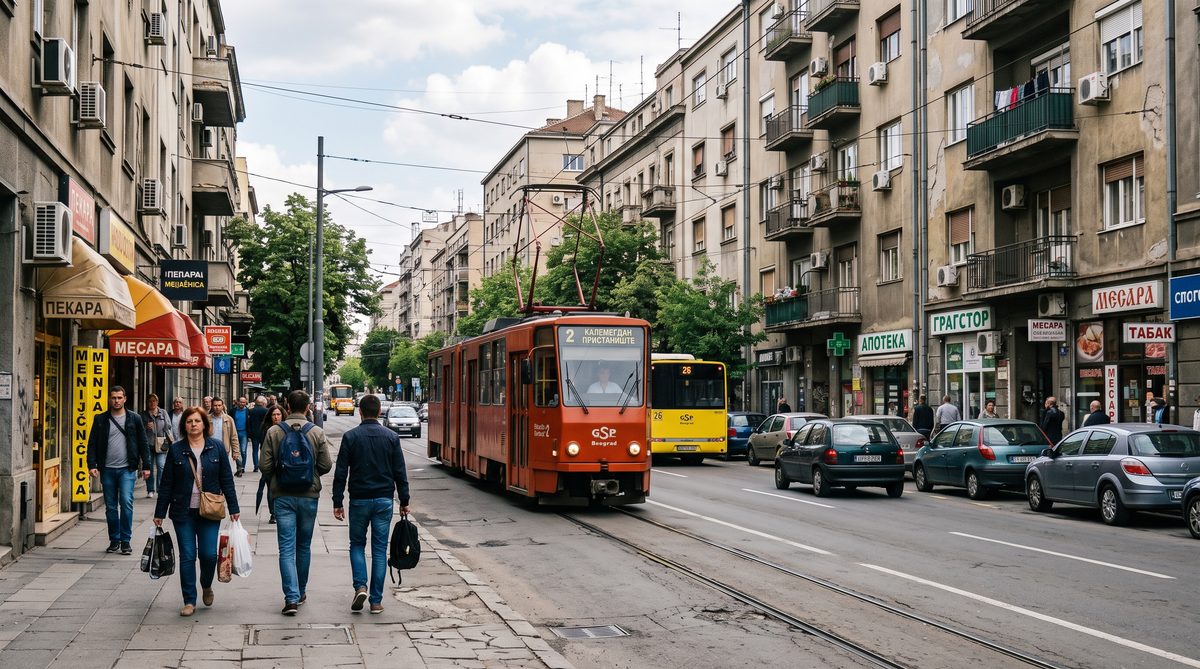
Serbia is a European country in the Western Balkans, surrounded by EU members and EU-candidate neighbors, and it holds EU candidate status itself with an ongoing accession process. Practically, that means it is in the European time zone, a short flight from major EU hubs, and tied to the EU through a Stabilisation and Association Agreement that has removed most tariffs on industrial goods between Serbia and the EU. For a founder who needs to be near European clients and markets without the cost and slowness of EU incorporation, that adjacency is the whole appeal.
A genuine cost and speed advantage.
- Company formation is fast and relatively cheap compared with much of the EU — often a matter of days once documents are in order
- Operating costs, salaries, and professional services run well below Western European levels
- The corporate tax rate is competitive (a flat rate in the mid-teens percent), and there are favorable regimes for certain activities
A real, not purely paper, presence.
Serbia has a functioning economy, a growing IT and services sector, and enough infrastructure that a company there can genuinely operate rather than just exist as a shell. That matters increasingly, because pure paper jurisdictions attract scrutiny from banks and tax authorities, while a real operating base in a real economy holds up better.
Who it fits.
Serbia suits a non-EU founder running services, trade, software, or consulting who wants a European operating base, values low cost and fast setup, and does not strictly require being inside the EU single market. It fits less well for a founder who genuinely needs full EU-member status — for VAT single-market treatment, EU funding, or the passporting that regulated sectors require.
Company Setup and What It Actually Involves
The common vehicle is the DOO (limited liability company).
The standard Serbian company for a founder is the društvo s ograničenom odgovornošću (DOO), a limited liability company. It can be founded by a single foreign founder, requires a modest minimum capital, and gives limited liability in the normal way. The registration goes through the Serbian Business Registers Agency (APR).
The practical steps:
- Reserve a company name and prepare founding documents (often needing translation and notarization)
- Register with the APR, which issues the company’s registration and tax identification
- Register for taxes and, where relevant, VAT
- Appoint a director — a non-resident can be a director, though some roles and practicalities benefit from local support
- Open a bank account (the step that most often causes delay — more below)
Non-resident founders can do this, with help.
You do not need to be a Serbian resident to own a Serbian company. You can found and own a DOO as a non-resident. That said, doing it remotely and correctly — translations, notarizations, tax registration, banking — is much smoother with a local accountant or corporate services firm. The cost of that help is modest and prevents the errors that cause delays. The step-by-step mechanics are covered in Serbia company setup for a non-EU founder.
Residency is a separate question from company ownership.
Owning a Serbian company does not automatically grant you residency, but running a real business can be a route toward a temporary residence permit, which some founders pursue for the ability to live and operate there. Keep the two questions distinct: incorporation is straightforward; residency is a separate, more involved process worth specific advice.
Banking, Taxes, and Currency Reality
Banking is functional but requires patience.
Opening a business bank account in Serbia is achievable but is the step most likely to test a non-resident founder. Banks apply real know-your-customer checks, some prefer the director to appear in person, and processing takes time. Plan for it, prepare clean documentation of the business and its owners, and lean on your local advisor to identify banks that work well with foreign-owned companies. Once open, Serbian banks handle euro and dinar accounts and international transfers competently.
The dinar and the euro.
Serbia’s currency is the dinar (RSD), not the euro, though the euro is widely used as a reference and many contracts are euro-denominated. This introduces a currency dimension: if you earn in euros and hold costs in dinar, or vice versa, you carry exchange exposure. It is manageable, but it is a real consideration — the same discipline that applies to any cross-border operator managing FX risk. Many founders keep euro accounts to minimize conversion.
Taxes — competitive but do it properly.
- Corporate profit tax is a flat rate in the mid-teens percent, low by European standards
- VAT applies in Serbia at its own rate; because Serbia is outside the EU VAT area, your VAT treatment for EU clients differs from an EU-to-EU supply (this is where cross-border invoicing rules get specific)
- Serbia has a network of double-taxation treaties that can prevent the same income being taxed twice — relevant if you or your business have ties to more than one country
- Payroll and social contributions apply to salaries; structure compensation with local advice
Get a Serbian accountant. The rates are low and the local knowledge prevents expensive mistakes with VAT, payroll, and treaty treatment.
EU Market Access — What You Get and What You Don’t
Be clear-eyed: Serbia is adjacent to the EU, not in it.
This is the point founders most often misunderstand, so it is worth stating plainly. A Serbian company is a non-EU company. You get proximity and a favorable trade relationship, but you do not get single-market membership.
What you do get:
- Tariff-free trade in most goods with the EU under the Stabilisation and Association Agreement, so physical goods largely move without customs duties (though customs procedures and documentation still apply)
- Ability to sell services into the EU as a non-EU supplier — European businesses can and do buy from Serbian companies routinely
- A credible European address and time zone, which helps with client trust far more than a distant offshore base
- Access to regional talent and lower operating costs while serving EU clients
What you do not get:
- EU VAT single-market treatment. Selling into the EU from Serbia means dealing with import VAT and customs on goods, and non-EU supplier rules on services — different and sometimes more involved than intra-EU trade under the reverse charge
- Free movement. Goods, and especially people and some services, still cross a real border with real procedures
- EU regulatory passporting. For regulated activities (finance, certain licensed services), a Serbian base does not grant EU-wide operating rights
Trade documentation still matters.
Because you are trading across the EU’s external border, customs documentation, rules of origin, and delivery terms come into play in a way they would not for an EU-internal company. Getting the paperwork and Incoterms right on cross-border trade becomes part of the operating discipline. The trade relationship is favorable, but it is still a cross-border one.
Serbia is a real and underrated option for a non-EU founder who wants a European base without the cost, delay, and residency demands of incorporating inside the EU. You get fast, affordable setup, competitive taxes, a functioning banking system, a genuine operating economy, and a trade relationship with the EU that keeps goods largely tariff-free and services flowing. For services, trade, and software founders who value cost and speed over strict single-market membership, that combination is compelling.
The honest caveat is the one to hold onto: Serbia is adjacent to the EU, not part of it. If your model genuinely needs EU-member VAT treatment, free movement, or regulatory passporting, an EU jurisdiction may still be the right — if slower and costlier — choice. Weigh what you actually need against what Serbia gives, get local accounting and legal help for the setup, and the EU-adjacent base becomes a practical foundation rather than a gamble.
Sources: European Commission — Serbia and EU enlargement · Serbian Business Registers Agency (APR)