
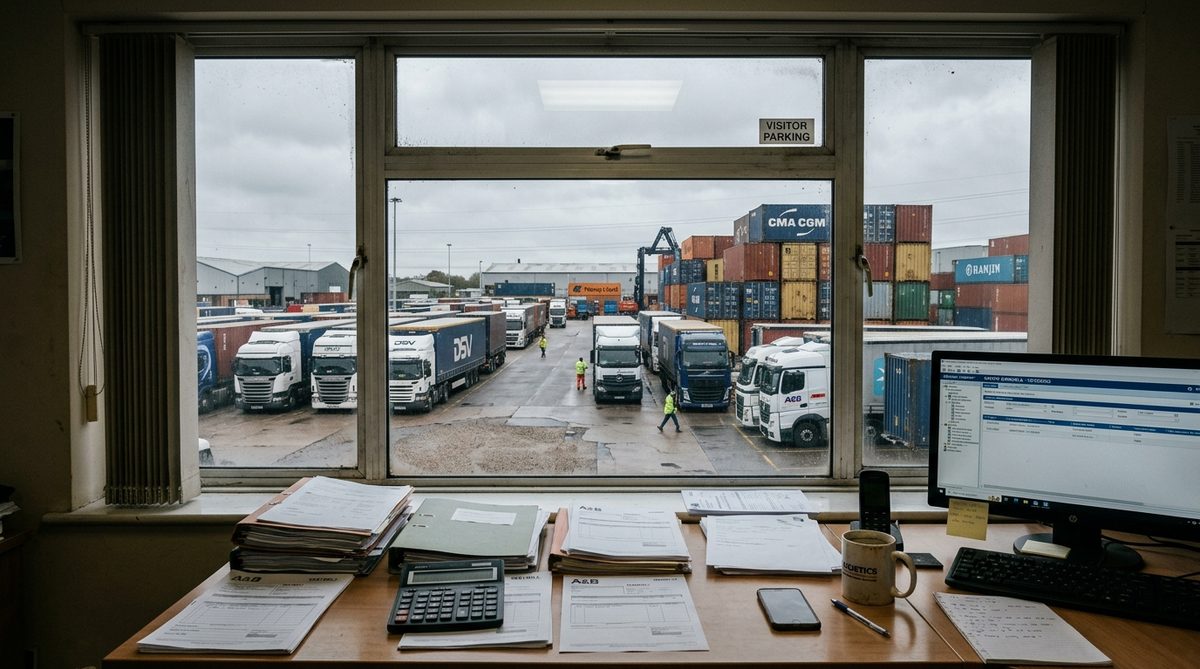
For businesses moving goods between Europe and Iran or the wider region, Turkey is not a detour — it is the road. The overland corridor through Turkey is the practical backbone of a large share of EU–Iran and EU–MENA trade, connecting European road and rail networks to the Middle East by land where sea routes are slow and direct options are limited. Understanding how this corridor actually works in 2026 — the crossings, the documentation, the realistic transit times — is the difference between a shipment that arrives on schedule and one that sits at a border for a week while costs mount.
The corridor is also frequently misunderstood by businesses new to the region. They plan around a headline transit time pulled from a freight forwarder’s brochure, then discover that border formalities, seasonal congestion, and documentation gaps add days nobody budgeted. The corridor rewards planning and punishes improvisation.
This is a practical 2026 update: how the Turkey transit corridor is structured, where the real friction sits, what documentation moves goods through it, and how to plan a shipment so the estimate you give a customer is one you can keep. It builds on our foundational overview of the Turkey transit corridor for Iran–EU trade.
The Corridor’s Structure — Road, Rail, and Where They Fit
Turkey connects European logistics to the Middle East by land, and the mode you choose shapes everything.
Goods moving from Europe toward Iran and the region typically enter Turkey from the northwest — via the land borders with Bulgaria and Greece, or by ferry across to Turkish ports — then cross the country to its eastern frontiers. Two modes dominate:
- Road freight is the flexible workhorse. Trucks run door to door, handle mixed and smaller loads, and adapt to changing destinations. The trade-off is exposure to border queues, driver-hours rules, and road conditions across a long overland route.
- Rail freight has grown as a corridor option, moving containerised volume across Turkey and onward with fewer of the labour and congestion variables of trucking. It suits larger, less time-critical, containerisable loads, but is less flexible on origin and destination points than road.
For most small B2B shipments, road remains the default because of its flexibility and the ability to handle less-than-full loads. Rail becomes attractive as volume grows and destinations stabilise. Many forwarders now offer combined road-and-rail routings; the right mix depends on your load size, timing tolerance, and destination. Turkey’s own trade and transport ministries and the broader EU transport framework treat this corridor as strategic infrastructure, and the EU’s transport policy pages give context on how European networks connect at the Turkish frontier.
Border Crossings — Where Time Is Actually Lost
The transit time on paper is the driving time. The real time includes the borders.
The single most common planning error is budgeting for the distance and forgetting the crossings. Each border in the corridor is a potential multi-day event depending on congestion, paperwork, and inspection.
- The entry into Turkey from the EU side (the Bulgarian and Greek crossings) is a customs and documentation checkpoint where queues form, especially in peak season and around holidays.
- The eastern exit toward Iran is where the most significant delays cluster. Border capacity, customs processing on both sides, and periodic congestion mean this crossing can add days that no driving-time estimate captures. Waiting lines of trucks at the eastern frontier are a recurring feature, not an exception.
- Any transshipment point — where goods change vehicle, mode, or carrier — is an added handling and documentation step, each with its own delay risk.
Plan with these realities built in:
- Add explicit border buffers to every transit estimate rather than quoting the optimistic through-time. A schedule that assumes zero waiting will slip.
- Avoid known congestion windows where you can — major holidays on either side, and seasonal peaks, predictably worsen queues.
- Confirm your forwarder’s current border intelligence. Conditions change; a forwarder who runs the corridor regularly knows this week’s real waiting times, which a static brochure never reflects.
The lesson is to quote customers a realistic window, not a best case. A shipment that arrives within a promised range builds trust; one that blows through an over-optimistic estimate damages it, even if the delay was entirely at a border outside your control.
Documentation — The Paperwork That Keeps Goods Moving
At every crossing, the documents are what move the truck, and a gap stops it cold.
Overland transit through Turkey runs on a specific set of documents, and incomplete or inconsistent paperwork is a leading cause of goods being held. The core set:
- The transit declaration — the customs document that allows goods to move through Turkey without being formally imported there, provided they are exiting to another destination. Getting the transit regime right is what prevents goods from being treated as a Turkish import.
- The CMR — the international consignment note governing road carriage, evidencing the contract with the carrier and the goods being moved.
- The commercial invoice and packing list — consistent with each other and with every other document. Any mismatch in description, value, quantity, or parties is exactly what triggers a customs query at a crossing.
- Certificate of origin and any product-specific certificates required by the destination.
- Permits for the vehicle and route as required for international road transport across the countries involved.
Two disciplines prevent most documentation delays:
- Consistency above all. The same goods must be described identically across every document. Border officials cross-check, and a discrepancy between the invoice and the CMR is a red flag.
- Complete before departure. A missing certificate discovered at a border is a multi-day problem. Verify the full document set is present and correct before the truck leaves, not en route.
This documentation discipline sits inside the broader compliance picture. Anything moving toward a high-risk destination also needs sanctions and end-user screening done before the shipment is arranged — see our trade compliance basics for small businesses and, for the specific exposure, the sanctions map for EU B2B operators.
Planning a Shipment You Can Actually Deliver On
Good corridor logistics is realistic planning, not optimistic quoting.
Bringing it together, a shipment through the Turkey corridor that arrives when you said it would comes from a few habits:
- Choose the mode for the load. Road for flexibility and smaller or mixed loads; rail as volume grows and destinations settle; a combination where a good forwarder recommends it.
- Build a realistic transit window that includes driving time plus explicit border and handling buffers, then quote the customer that window rather than the best case.
- Work with a forwarder who runs this corridor regularly and can give current, specific border and route intelligence rather than a generic estimate. On a route this variable, the forwarder’s live knowledge is worth more than a marginally cheaper rate.
- Get the documentation complete and consistent before departure, and keep copies organised per shipment for the retention your jurisdiction requires.
- Align delivery terms with the route. Who bears cost and risk at each leg — and precisely where responsibility transfers — should be fixed in the Incoterm, not left ambiguous across a multi-border journey. Our guide to Incoterms for EU–Iran trade shows how to set this so the corridor’s risks land where they should.
Expect variability and communicate it.
The corridor is reliable in the sense that it works consistently; it is variable in the sense that any given crossing can be slow. The professional approach is not to promise certainty the route cannot provide, but to plan with buffers, keep the customer informed if a border delays a shipment, and consistently deliver within a realistic window. Customers who understand the corridor respect an honest estimate far more than an optimistic one that slips.
The Turkey transit corridor remains the practical backbone of EU–Iran and wider regional overland trade in 2026, and businesses that move goods through it succeed by planning for how it actually behaves rather than how a brochure describes it. That means choosing the right mode for the load, building border and handling buffers into every transit estimate, keeping documentation complete and consistent before departure, and working with a forwarder whose corridor knowledge is current.
The corridor rewards realism. The businesses that build trust with their customers on this route are the ones that quote a window they can keep, communicate honestly when a border causes a delay, and treat the documentation and compliance work as non-negotiable rather than a formality. Plan for the corridor as it is, and it becomes a dependable trade route rather than a recurring source of surprises.
Sources: EU transport policy · ICC Incoterms rules