
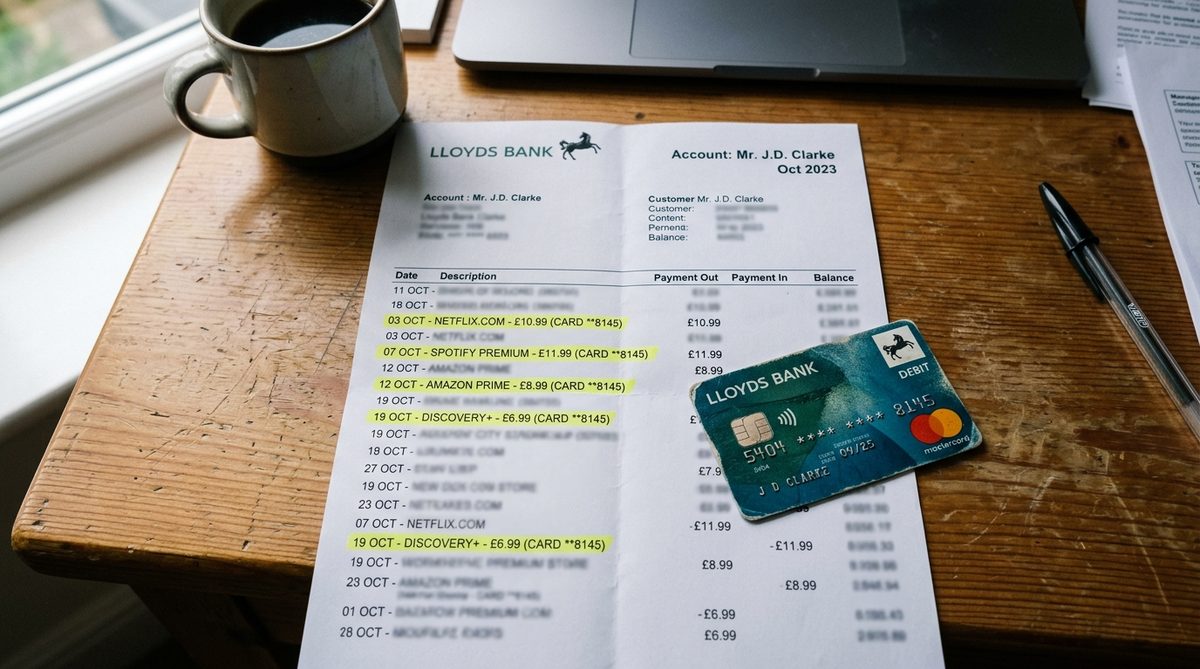
Software spend creeps. A small business signs up for a tool during a busy month, adds a seat when someone new joins, upgrades a plan to unblock one feature, and never looks back. Two years later the monthly total is three or four times what anyone remembers approving, and most of it runs on autopilot through a company card no one reconciles line by line.
For a European small business running on tight margins, this matters more than it looks. Two hundred euros a month of unused SaaS is €2,400 a year — often the difference between hiring a part-time contractor and not. The problem is rarely one expensive tool. It’s the accumulation of small ones that individually feel too minor to question.
This guide is a repeatable method for cutting SaaS cost without breaking anything that works: build the inventory, kill the overlap, right-size the seats and plans, and renegotiate the contracts that are worth keeping.
Build the Full Inventory Before You Cut Anything
You cannot reduce what you haven’t listed.
Most owners underestimate their SaaS footprint by half. The first job is a complete inventory, and the fastest way to build it is from the money, not from memory.
- Export the last 12 months of transactions from every card and bank account the business uses
- Filter for recurring charges — anything that appears monthly or annually with the same merchant
- Add the annual subscriptions people forget: they only bill once, so they hide from a monthly scan
- Check the app stores and any personal cards that get expensed, where rogue subscriptions live
For each tool, record five things: the name, the monthly-equivalent cost, who owns it, how many people actually use it, and when it renews. That last column is the one everyone skips and the one that saves the most money later.
Sort by annual cost, not monthly.
A €40/month tool reads as small until you write €480/year next to it. Sorting the full list by yearly spend reframes the conversation. It’s common to find that the top five tools account for 70% of total SaaS spend — which means the review effort should concentrate there, not on the €6/month utility that isn’t worth an hour of anyone’s time.
By the end of this step you have one sheet with every subscription, its true annual cost, and its renewal date. That sheet alone usually surfaces two or three charges nobody can explain — the free trial that converted, the tool a former employee set up, the annual plan for software you switched away from.
Kill Overlap and Zombie Subscriptions First
The easiest savings need no negotiation — just cancellation.
Before touching anything you actively use, remove two categories that carry zero risk.
Zombie subscriptions are tools nobody logs into. Check the last-active date in each admin panel. If no one has signed in for 60 days, it’s a candidate for cancellation. The honest test: cancel it and see if anyone notices within a billing cycle. Most don’t.
Overlapping tools do the same job twice. Small businesses accumulate these because different people solve the same problem independently. Common overlaps in a European small-business stack:
- Two note or document tools (Notion plus Google Docs plus a legacy Word workflow)
- A standalone scheduling app when your email suite already includes booking
- Separate design tools where one covers the actual need
- Multiple file-storage plans across Google, Dropbox, and OneDrive
- A dedicated email marketing tool plus a CRM that also sends email
For each overlap, pick the tool that covers the most jobs and migrate off the others. Consolidation is worth more than the raw saving because it also cuts the hidden cost of context-switching and fractured data. A minimal, deliberately small tech stack is cheaper to run and easier to reason about than a sprawling one where three tools each hold a slice of the truth.
Cancel zombies immediately. For overlaps, set a two-week migration window, move the data, then cancel — don’t cancel first and scramble.
Right-Size Seats and Plan Tiers
Most SaaS waste is paying for capacity you don’t use.
Once the obvious cuts are done, the remaining tools are ones you genuinely need. The saving here comes from matching the plan to actual usage rather than to the tier a salesperson steered you toward.
Audit seats. Per-user pricing is where overpayment hides. Open each tool’s user list and compare it to who works there now. Remove former employees, contractors whose projects ended, and duplicate accounts. On a 10-seat plan where 6 people are active, you’re paying 40% overhead. Many tools let you drop seats at renewal; some allow it immediately with a prorated credit.
Audit tiers. Plans get upgraded to unlock a single feature, then stay upgraded forever. Ask, for each premium plan: what specific feature moved us up, and do we still use it? If a team upgraded to a Business tier for one report that nobody reads anymore, the downgrade is free money.
Watch the annual-versus-monthly trade. Annual billing usually saves 15–20% but locks you in. Pay annually only for tools you are certain to keep for a year. For anything you’re evaluating or might replace, stay monthly and accept the small premium as the price of flexibility.
Question per-contact and metered pricing. Some tools bill on volume — contacts, emails sent, API calls, storage. Check whether you’re on a tier sized for growth you haven’t reached. A CRM priced for 10,000 contacts when you have 800 is a straightforward downgrade. When you’re choosing new tools, favour volume-based pricing that starts genuinely small, which is part of why a minimum viable CRM beats an enterprise suite for a small operation.
Renegotiate the Tools Worth Keeping
Software list prices are rarely the real price, especially near renewal.
For the handful of tools that survive the audit and cost real money, the renewal date is leverage. SaaS vendors would rather cut your price than lose you, because the cost of acquiring a replacement customer dwarfs the discount.
A simple approach that works for a small business:
- Ask for the annual discount directly. Email support or your account contact 30 days before renewal and ask what discount applies for a 12-month commitment. Many list a public monthly price but grant 15–25% for annual prepay on request.
- Mention the competitor honestly. If a comparable tool is cheaper and you’d genuinely consider switching, say so. “We’re evaluating [alternative] at [price] for our renewal” often unlocks a retention offer within a day.
- Ask about small-business or startup pricing. Many vendors have unadvertised tiers for companies under a certain size or revenue. You have to ask; it’s rarely on the pricing page.
- Time the ask to their quarter-end. Sales teams close deals against quarterly targets. A request in the last two weeks of March, June, September, or December tends to get a more generous response.
Keep it factual and unemotional. You’re not threatening to leave; you’re a customer confirming you’re on the right plan at the right price. If the answer is no, you’ve lost nothing and you have a clean number to compare against alternatives.
Document every renewal date in a shared calendar with a reminder 30 days out. The single biggest cause of overpayment is auto-renewal at list price because nobody saw it coming. A calendar reminder converts each renewal from an ambush into a scheduled negotiation.
Make the Savings Stick with a Standing Process
A one-time purge saves money once. A quarterly rhythm keeps it saved.
SaaS spend re-accumulates the moment you stop watching it. The fix is a light standing process, not a heroic annual audit.
- One card, one owner. Route every subscription through a single card that one person reconciles monthly. Scattered billing is how zombies are born.
- A request step for new tools. Anyone can propose a new subscription, but it goes through one person who checks it against the existing stack for overlap before approval. This is the highest-leverage control — it stops duplication at the source.
- A quarterly 30-minute review. Open the inventory sheet, scan for new charges, check usage on the expensive tools, and confirm upcoming renewals. Thirty minutes a quarter is enough to keep the whole stack honest.
- A kill-first default. When a tool is borderline, cancel it. Re-subscribing takes five minutes if you were wrong; the tool almost never gets missed.
The goal isn’t the cheapest possible stack — it’s a stack where every euro maps to something the business actually uses. A tool that saves real time is worth paying for. A tool that duplicates another, sits unused, or runs at three times the seats you need is pure leakage.
Cutting SaaS cost isn’t a matter of finding one expensive villain. It’s the discipline of seeing the whole picture, removing what does nothing, sizing what remains to real usage, and negotiating what’s worth keeping. For most small businesses the first full pass recovers 20–35% of total software spend — money that was leaving the account every month with nobody deciding it should.
Do the audit once properly, then protect it with a quarterly habit and a single owner. The tools that survive that scrutiny are the ones genuinely worth their price, and knowing that is worth as much as the savings.
Sources: European Commission — SME definition and support · OECD Digital for SMEs